Valplast Weighing Automation · Case Study — Metrici LPR Weighing Module
Case Study · Romania

Valplast weighing automation, powered by Metrici LPR Weighing Module

License Plate Recognition
Weighing Module
Dedicated Interface
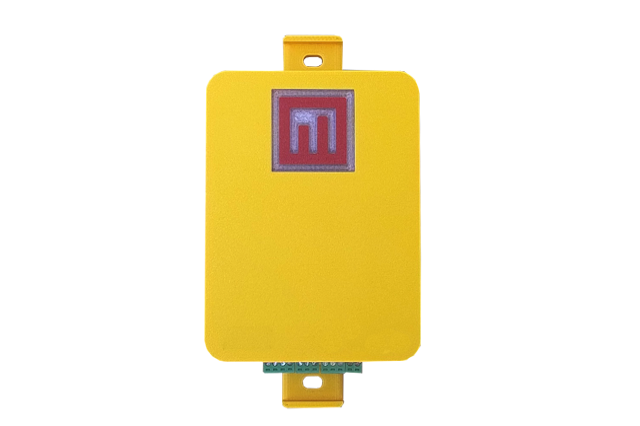
Barix Barionet
3
LPR cameras deployed
3
Laser sensors
24/7
Continuous vehicle monitoring
0
Manual weighing entries

Romania's leading PVC producer.
One pilot. Zero tolerance for losses.

Valplast Industrie is the leading producer of PVC pipes and plastic materials for sewage, drainage, water wells, and protection of electric and communication cables in Romania.

The company's operations began in 2001 and have expanded steadily every year, with warehouses, distribution centers, and production units across Romania.

As a pilot project, the company chose to monitor one of their many facilities and reduce losses by automating the weighing process. The human factor is prone to errors — whether accidental or intentional — so the process of weighing vehicles and recording events needed to be fully automated.

Valplast wanted to monitor every vehicle entering and exiting the facility and eliminate losses and thefts from the storage depot. They needed a fully automated solution for access control and weighing — checking vehicles 24/7, without exception.
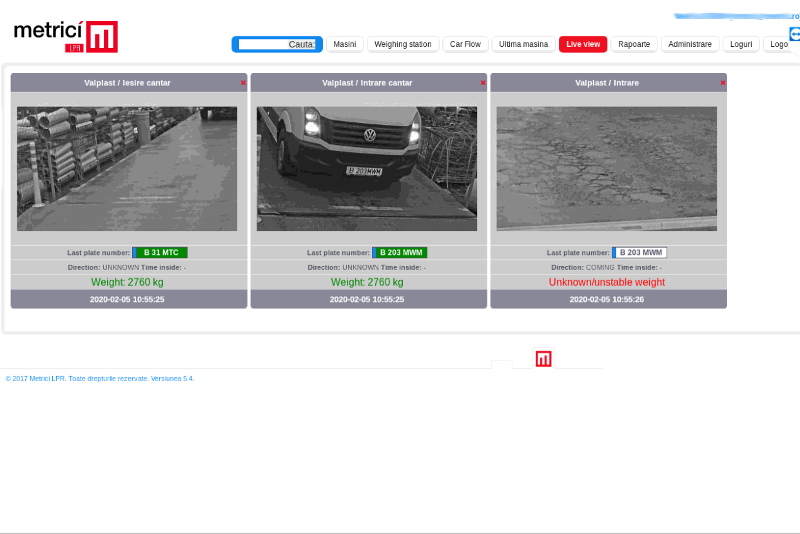
Valplast - Live view of weighing station
Valplast

Live view

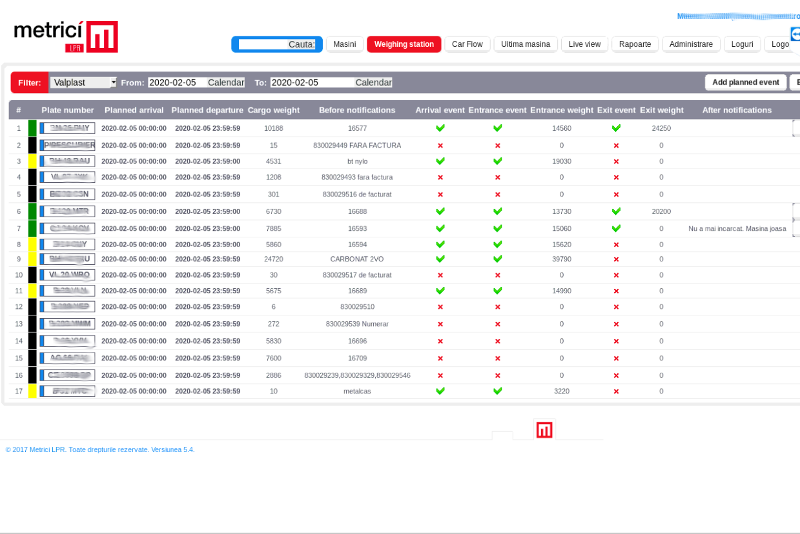
Valplast - Dedicated and color coded interface
Valplast

Dedicated and color-coded interface

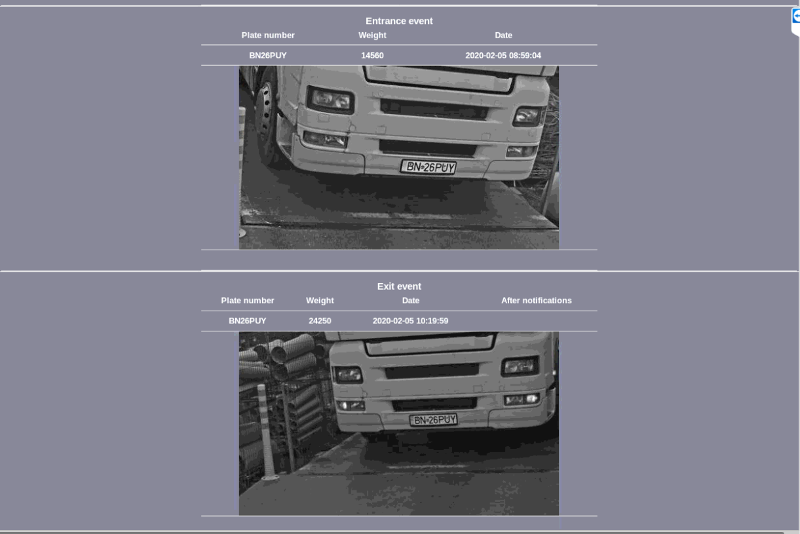
Valplast - Entrance event recorded
Valplast

Entrance event

Valplast - Exit event recorded
Valplast

Exit event

Three cameras. Three sensors.
Full weighing automation.

Metrici, together with integrator Tritech, proposed monitoring the weighing station with three LPR cameras and supporting hardware. The location already had two barriers in place.

The team installed three laser sensors: two at the ends of the weighing station and one at a diagonal angle — depending on which are triggered, Metrici is signaled to begin detection for either side of the station.

Traffic lights at each end of the station indicate to the driver when the vehicle is correctly positioned. A dedicated, color-coded interface was also designed specifically for this type of project.

A dedicated interface was built for this project. Before vehicles arrive, the administrator pre-registers each one with plate number, arrival date and time, planned departure date and time, and expected cargo weight. The remaining fields are automatically populated by Metrici as each event unfolds. The color-coded interface makes operation intuitive — and not all fields are mandatory.

Weighing Process Flow

Step by Step · From vehicle approach to exit verification

The system can operate in two modes: pre-registered vehicles only, or open to all detected vehicles. In open mode, any detected vehicle is automatically added to the Metrici process list at the first step.

STEP 01

Vehicle Approach & LPR Detection

When a vehicle approaches the camera, the license plate is detected. If that plate is on the pre-registered list, the first barrier opens for the vehicle to enter the weighing station.

STEP 02

Vehicle Positioning

The vehicle positions itself on the station while the sensors monitor the scale. When two sensors are obstructed — one perpendicular to the scale and one at a diagonal angle — a trigger is sent to Metrici to begin LPR detection and register the weight.

STEP 03

Position Confirmation

A green traffic light confirms to the driver that the vehicle is correctly positioned on the station.

STEP 04

Weight Capture & Entry Recording

A short countdown ensures the weight reading has stabilized, after which Metrici performs the LPR detection and records the weight. The event is logged in the database with a photo, weight reading, and timestamp — and the "entrance weight" field is populated in the dedicated interface.

STEP 05

Exit Weighing & Comparison

At exit, the vehicle is weighed again. Metrici compares the entry weight with the exit weight, and cross-checks both against the expected cargo weight entered by the administrator.

STEP 06

Deviation Alert

If the deviation exceeds a configurable threshold (set in the interface), an alert is triggered and the exit barrier remains closed until a human operator verifies the vehicle and cargo. An email alarm is sent to predefined addresses.

Technical Data · Valplast Installation
3
Axis P1425-LE cameras
3
Laser sensors
3
Barriers
2
Traffic lights
1
Central server
3
Metrici LPR licenses
1
Dedicated software solution and implementation
1
Weighing station integration
Full automation: access, weighing process, and exit
Dedicated alarms with email notifications
Dedicated firmware for Barix Barionet
Integration with external database

Successful pilot.
Nationwide rollout planned.

The pilot installation delivered full automation of the weighing process at Valplast's facility — and proved the concept at scale.

🛡️

Eliminated losses and theft

Automated weight comparison at entry and exit, cross-checked against expected cargo, prevents material theft with configurable deviation alerts.

Zero manual intervention

The entire process — from vehicle approach through weighing to exit verification — runs without human involvement, 24/7.

📊

Dedicated color-coded interface

Pre-registration of vehicles, automatic event logging with photos and timestamps, and deviation alerts — all through an intuitive interface.

🔔

Automated alerts and barrier control

When weight deviations exceed the configurable threshold, the exit barrier stays locked and email alarms are sent until a human operator verifies the situation.

Following the successful pilot, Valplast plans to deploy the solution across all its locations in Romania. The solution is now available to any company looking to automate their weighing process and has been adopted by many.